Monday, May 21, 2012

RSBY Medical Camp . . .

Couple of weeks back, I was informed about the program of holding a medical camp in Satbarwa by RSBY. I had been quite vary of medical camps since I had been part of quite a lot of them. They are quite good for bringing in publicity. From a public health point of view, I'm not sure of how useful they are except for a chance for screening populations for chronic diseases like hypertension or diabetes. 


On asking the concerned staff on what the objectives are - I was informed that it is basically to screen patients for elective surgeries. I was not much impressed. However, did not want to discourage the RSBY staff. And it was first one I was doing in the name of RSBY and also after I came back after my post-grad. And I thought of giving it a good try - with all inputs from the hospital put in. The Community Health Department made quite an effort.


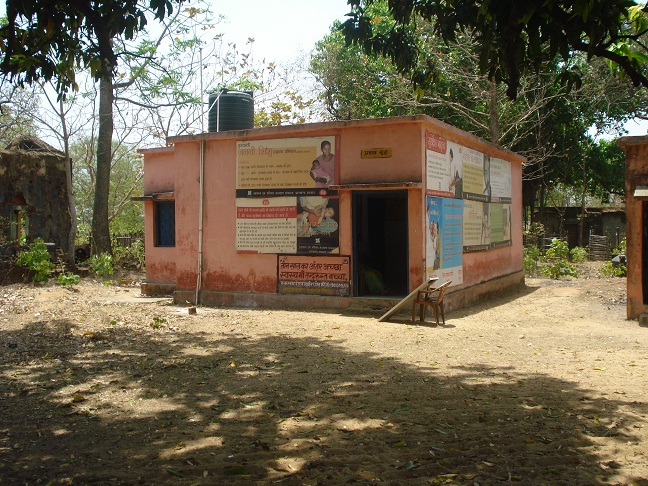
Following are the snaps from the camp. We got quite a lot of patients - totalled about 150. We had 3 doctors at the place including Dr Isac Jebaraj, an orthopedic consultant from the Christian Medical College, Vellore who was visiting us along with a batch of 2nd year Medical Students.

Getting the place ready
The ophthalmology team

Registration

Everybody . . .

Drs. Isac Jebaraj (white shirt), Nandamani (blue shirt) and Titus (yellow shirt)
Lessons learnt at the end - 

1. Medical camps are a waste of time especially for hospitals like us which have quite a regular crowd.  At least when they are arranged like this without much of a targeted approach. Lately, I realized that even hospitals such as Apollo has dropped their camp approach for valvular heart diseases.

2. Providing constant and regular service is more important in healthcare rather than mass efforts such as medical camps. 

3. We never got any surgical patients. Most the patients were those with backaches and vague complaints. Like most medical camps I've been to, most of the patients appeared to have come because there was a doctor available for free consultations and some free medicines.


Well, this post would not be complete without the mention of some small drama that happened. We had been told about the camp for almost a week. The venue was all decided and we were given the responsibility of publicity, which we did quite well. However, on the day before the camp, I received a phone call from the RSBY DPM saying that they were thinking of changing the venue. 


The venue surprised us - a newly opened private hospital about 1 km beyond Satbarwa. It was outrageous. I wondered what they were up to. I expressed our unwillingness to go and sit at a private hospital. I told them that I would not have any problem having the camp in the local government subcentre or the new primary health centre almost nearing construction. 


After being stubborn about this, they finally relented and agreed for the original venue.


Well, for a status update, since we were empaneled (March 2012), we've already treated 100 odd patients as in-patients and 570 patients in out-patients under the scheme. And do remember, we must be one of the very few hospitals in Jharkhand who does not charge registration and consultation fees for outpatient care for RSBY card-holders.


The challenge remains payments from the insurance provider - so far we've only received about 120,000 INR out of the 250,000 claimed (only claims submitted 21 days back) . . .  We hope that payments would be a bit more fast . . .We're already making extra investments for the poor - but payback is becoming tough. Do remember the 50,000 INR we lost because of free outpatient registration and consultation. And expenses for medical camps such as the one I described . . .And all these in a space of not even 3 months . . .

Saturday, May 19, 2012

Prayer Bulletin . . . 20 May . . .

1. We thank the Lord that the progress of the burns building. Over the last week, we had the new Brick Making Machine arriving all the way from Coimbatore. We've already started making the bricks. 


2. Couple of weeks back, a major fire within the campus was averted. We thank the Lord that we were able to detect the fire on time and fire-extinguishers purchased quite recently were available on hand to put out the fire. In addition, we also had a major fire in the local telephone exchange following which our telephone connections had gone off for about a week. Couple of days back, our mobile connections were restored. The internet and landlines are still to be restored. 

The clump of bamboo trees that caught fire behind the mess
Smoke billowing from the burning telephone exchange . . . 
3. I hope that you read about my post about a particular incident published in paper couple of weeks back. Kindly pray for this country. The amount of occult and evil practices continue to hold a stranglehold in our society. Many of these practices which is aimed at the poorer and marginalized sections of the society continue in the name of traditions and customs. Please pray that people will see the futility of practices such as these. 


4. The need for a medicine consultant in the hospital is becoming all the more evident. In addition, we need a pediatrician and nursing personnel. We pray that the Lord will move the hearts of people to serve alongside us. 


5. The beginning of the hot and fiery summer came up with major financial liabilities for the hospital. To start with 2 of our generators crashed. By God's grace, we could repair one without much problems. Unfortunately, the second one which is actually the newer one was found to have a major fault which needs expensive repairs. To make matters worse, we realized that the newer one had some sort of technology which was not in use anymore and therefore is of no resale value. Which ultimately means that we should be planning to buy a new 100 KV generator which would cost about 700,000 INR (approx 14,000 USD/Euros or 9000 GBP). We had also been planning for a smaller 30 KV generator which would cost an additional 350,000 INR (approx 7,000 USD/Euros or 4500 GBP).


6. The urgent need for the purchase of new school bus remains, which would cost approximately 1,300,000 INR (approx 26,000 USD/Euros or 13500 GBPs). 

Our old school bus. When I had put this snap few weeks back someone suggested that the bus looks new.
Well, our engineer has kept it going on for some time now.  But the engine and interiors are quite worn out. 
7. Kindly pray as the minimum standards for the Clinical Establishment Act is formulated.


8. We thank the Lord for the students from CMC, Vellore and senior consultants, Dr Isac Jebaraj and Dr Prasanna who gave us company for about 2 weeks last month. We hope that this experience would widen their outlook to healthcare scenario in the Indian subcontinent and play a role when they determine their choice of service. 

The students at a teaching session

A visit to the nearby dam.
9. Quite a lot of of our staff would be away travelling during the next one month on holiday. Kindly pray for journey mercies as well as time of relaxation and rest during the holiday season. Please also remember those who are staying behind in the harsh summer (I heard that it is 46 degree Celsius today) to serve our patients.


10. We start the admissions for the Nursing School from next week. Kindly remember the entire process in your prayers.  

Tuberculosis Unit . . . Supervisory Visit . . .

As part of our responsibilities of a Tuberculosis Unit catering to a population of about 650,000 (each TU usually caters to 500,000 population), we need to make supervisory visits to the different Primary Health Centres and Microscopy Centres in our area. 


It has been quite some time since I had visited the areas after Dr Johnson took over charge of the TU. Over the last week, it has been obvious that Dr Johnson may not be continuing with us and I thought it would be good to accompany the TU staff while they supplied the drugs. 


It turned out that there was a new MDRTB (Multi-drug Resistant Tuberculosis) patient in our area - in fact the first one in Palamu district to be started on DOTS Plus anti-tuberculosis treatment regimen. I had to visit him. 


Being summer, I was relieved that the air-conditioned Bolero was at my disposal. Along desolate, dry and depressing landscape, I made my way to each of the Primary Health Centres under us. For confidentiality's sake I do not wish to mention the names of any of the places I went to. Of course, there are photographs . . . 

The first place of my visit was a Community Health Centre. It operated from a new building since the last time I had visited it. Quite spacious and well planned, it was an administrator's dream. Well, I was told there were 10 doctors posted. About 2-4 of them visited the Outpatient every day. There was no resident doctor although there was a shabby quarters for them at the entrance of the CHC. 


From the staff, I came to know that there were about 30-40 deliveries every month. However, there were hardly any facilities to manage complications. This is was the CHC for our target area of around 600,000 population. 


The TB facilities were as expected. Lower number of sputum examination rates of chest symptomatics. 


We could not meet any of the Medical Officers or other staff as it was too early. But, late enough for the private lab run by the laboratory technician to have opened and started business. 


We reached the PHC as the daily business was on full swing. Old buildings doted the compound. I was introduced to the Medical Officer in charge - I was quite surprised the way he was talking. He appeared quite incoherent and confused. I thought that he is old - nearing retirement - some amount of senile dementia setting in . . . 


As I came out after meeting the old doctor, one of the staff asked me if I understood anything he spoke. It seems that he was a die hard ganja (local name for cannabis) addict. It was sad . . . The situation about tuberculosis was the same at this PHC too. The best part was a very enthusiastic laboratory technician, RK who kept the numbers coming in a good pace. . . 


Then, was a long drive through some badly Naxalite infested areas to our third place. The PHC which caters to a population of around 120,000 did not have any doctors visiting the place for ages.

The PHC . . . No takers . . .

The labour room . . . Nobody had an idea about the number of deliveries per month. One staff told me it was about 5-10 per month . . .Remember that the served population is about 120,000.
A rough calculation says that there would be 3000 deliveries per year in the target area . . .
 
Indication of better times. The old dilapidated doctor's quarters

Poor electricity facilities, necessitating devices like this solar powered mobile phone charger

The staff appeared quite protective about the status of doctors visiting the place. Once more, we had a very enthusiastic laboratory technician who was very pro-active. 


We were quite tired by the time we finished the third place. 


In between the next visit, we visited one Catholic mission centre where they were trying for the upliftment of the tribal community. It had been 12 years since the work had started - but it seems that the community was hardly interested in any sort of development or progress. The mission centre was running a school for the local community. Of recent, they have sort of taken an foray into healthcare too - and we had been supporting them technically. A very potential place for virgin public healthcare work to start. . . 


By the time, we reached our last PHC, it was late afternoon. The outpatient was over and most of the staff had left. The lab technician was waiting for us to arrive. We were also in a hurry . . . 


It was around late evening by the time we reached back to NJH. . . 


Lessons learnt at the end of the visit - 

1. Rural public healthcare is a neglected area in our country.
2. There is a need for committed healthcare personnel in such places. 
3. We're not going to achieve much in terms of vital statistics if there is no drastic improvement of public healthcare facilities. 
4. Committed staff such as the two lab technicians we met do not receive any sort of accolades for the service they render to such difficult communities. Which of course prevents others from coming to serve in such areas.
5. There were many more patients like AD all over our communities. The challenge is to reach out and find them.   

Wednesday, May 9, 2012

MDRTB . . . Our first patient on DOTS Plus . . .


Last week, I had to do the fortnightly supervisory visit of our Tuberculosis Unit. In between the visits to the different PHCs,  we stopped to visit AD - supposedly the first MDRTB patient to be put on DOT Plus in the district as well as under our Tuberculosis Unit.

The drive . . . Desolate and dusty roads . . .
A young man, unmarried, looking emaciated but quite high on enthusiasm met us as we reached the village. He had been on Anti-tuberculosis medicines for quite some time. Unlike many of our regular tuberculosis patients, AD came from a high caste family. And we found something which we find in many of the upper caste tuberculosis patients - an aversion to free medicines available from the government. 

The street where AD lives . . . AD can be seen sitting in front of his home . . .

On detailed question, it was very obvious that this aversion to free medicines is what gave him away. AD, who was a very outgoing and fun-loving guy just did not have the discipline to stick to medications which he was supposed to take on a regular basis and his upper caste status discouraged him from getting himself free medicines for treatment. He had felt better many a time and had stopped treatment himself . . . 


Which ultimately landed him in this state of affairs . . .What surprised me was that he was still a bit careless. He was not very careful with what he ate and he loved roaming the village roads on his bike. 


Later we went to visit his DOTS provider. A quack who is very much sought out - I thought I should pay a visit to him and give him some encouragement for the work he was doing. The village was so remote and he was an obvious messiah to all those who fell sick in the villages near by. 

RS, the quack who's DOTS provider to AD . . .
He was quite proud of his clinical achievements and the succor he has been to the multitude of poor and sick villagers who were very much dependent on his skills. . . We did not have much of a time, but it was quite an entertainment listening to him. 


After, seeing AD one more time and reiterating about the need to stick on to his medications, we were on our way to the PHC.


As I drove, it was very obvious that there were many like AD in the villages I was whizzing through - it would take a herculean effort to treatment them and more so to detect as well as prevent such cases . . . Sometime during the next week, I would post on my visit . . . and you would realize a major reason TB is going to stay on with us . . .


Well, I almost forgot, AD's brother is also a defaulter who's sick with persistent cough and fever for almost a year and is awaiting his culture . . . He was away visiting when we met AD . . .  

Monday, May 7, 2012

The Occult . . . And Worse . . .


Below, is a clip of a news item published in our vernacular daily last week.


The translation is as follows -


It has been reported that a certain Mr. Mukhan Ram (55 years), a resident of Dharuwa village under Kanti Police Station was paraded in the village after having his hair tonsured. Mr. Mukhan Ram is a witch doctor by profession since the last 10 years.


The Panchayat had decided that Mr Mukhan should be punished in social, economic and psychological terms. In relation to the incident, villagers reported that the wedding of the daughter of a certain Umesh Ram took place on 23rd April. Mr. Mukhan had done a certain ritual during the wedding. After the ceremony, when the girl was leaving her house to her husband’s place, she had become unconscious. The girl’s father, Mr. Umesh Ram brought a new witch doctor for further ceremonies from Belchampa, Palamu. The new witch doctor proved by his magic powers that Mr. Mukhan Ram was responsible for the girl becoming unconscious after the wedding ceremony.


Mr. Mukhan Ram’s wife got into a fight with the family of the girl after hearing this. Mr. Umesh has demanded that Mr. Mukhan Ram pay up 25,000 INR which he had to spend towards getting his daughter alright after she had swooned during after the wedding ceremony. The Panchayat has given a time frame to Mr. Mukhan to pay up this amount.


Amazing, for two reasons -

1. First and foremost – the newspaper deciding to put this into print.

2. Second – to note that we continue to incidents like these in our country. Most probably, the girl would have too tired and probably hypoglycemic after the ‘long Indian wedding’ – and that was enough for a witch doctor to extract 25,000 INR from the family towards healing her . . .


My countrymen, we can only weep for our fellow brothers and sisters who are caught up in this mire of ignorance and sorcery . . .