Monday, March 16, 2015




Saturday, March 14, 2015
About Renal Failure . . .
Yesterday, as I saw a patient, the relative asked me if I
remember a young man who came to us about a month back. It was not difficult to
remember the young man. We shall call him DK.
DK was just 17 years old. He had quit his studies couple of
years back and was making a living doing odd jobs around our town. 6 months
back, someone told him about big opportunities in Mumbai. He went off to Mumbai
only to fall sick within few months.
He just had unexplained vomiting. Nobody could find out what
was wrong with him.
DK came back to Kachhwa and came to us. The doctor who saw
him did not have to delve much into his complaints. Renal failure was written
on his face.

His blood pressure was 210/140 mm Hg and serum creatinine
came as 24 mg%. We sent him off to a tertiary hospital near by.
He came back after 1 week in quite a bad shape. He already had
3 dialyses. On reaching the public tertiary care centre, the doctors told him
that there was no free bed to admit him for emergency dialysis. They offered a
referral to a private hospital.
The family coughed up 60,000 INR from various sources and
slowly they realised that it was a losing battle without adequate funds.
They took discharge and him to us. One of the relatives told
me that they are already in debt of about 30,000 INR. They could not afford to
go into any more debt. We also could not offer anything.
Yesterday, I came to know that DK died the next day.
I’m glad to see a news report about the burden of Renal Failure in the country.
DK is the 3rd patient I encountered over the last
4 months of our stint in Kachhwa who died. We’ve about a dozen patients who are
in the verge of going into End Stage Renal Disease. 2 causes predominate here –
poor control of diabetes and hypertension, abuse of NSAIDs.
There are 3 options, no four for our countrymen once someone
has End Stage Renal Disease. In the absence of public healthcare facilities to
tackle ESRD, the best option for many of our countrymen is to go home and die.
The next option is to do peritoneal dialysis which would cost up to 20,000 to
25,000 INR per month theoretically – in practice, I’m yet to see someone on PD
who does not incur an expense of less than 30,000 per month.
The second best thing would be to have hemodialysis provided
you have good centres near your place of residence. The article says 1200 to
2000 INR per session. You need about 10 such sessions every month. Then, there
is the additional cost of medicines. That also comes up to around 25,000 to
30,000 INR per month.
The best treatment is to undergo a renal transplant. I
understand that transplant laws are quite stringent that it is quite difficult
to get a transplant done. And then there are costs involved. Many patients
thing that renal transplant is like a magic bullet. After a renal transplant which
costs between 100,000 INR in government centres to as high as 800,000 in
private centres, there is the prohibitive cost of immunosuppressive medicines
to be taken for life. The average expenses post transplant run to about 15000
to 20000 per month.
The best bet seems to be preventing renal disease. Avoiding and
promptly treating urinary infections and early diagnosis and optimal treatment of
hypertension and diabetes should be given priority in all primary care centres
of the country.
Otherwise the burden of renal disease is just going to
overwhelm us.
Friday, March 13, 2015
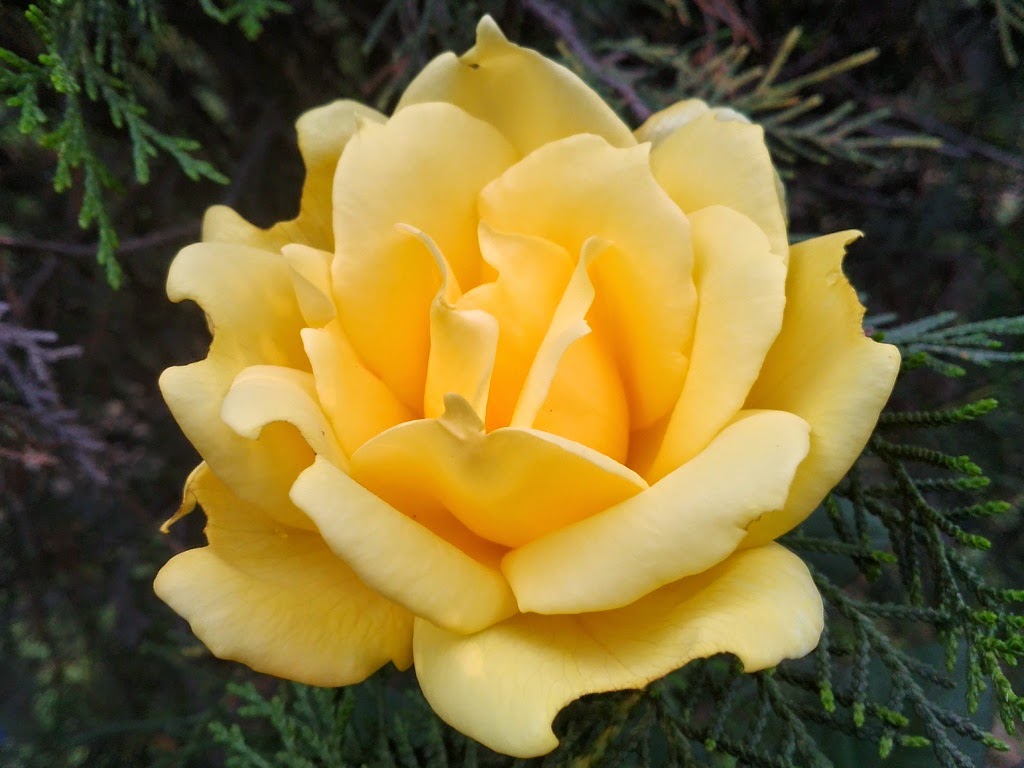
A single rose . . .
We still have roses of all hues and colors blooming in the garden in front of our house. Last week, I thought we had one of the most beautiful of them , , ,
Snaps of the rose as it bloomed . . .


Tuesday, March 10, 2015
Breathless . . .
Few days back, one of my friends reminded me that I'm yet to post much about patient management at KCH. There have been quite a many . . . but I've been busy . . .
Today was a significant day for the hospital as we had more than a 200 outpatients (227 to be exact) for the first time in 2015.
Very similar to one of my first posts when I was at NJH . . . a small account of some critical patients. Though the volume is not yet up to NJH levels, I'm sure all five cases would interest you . . .

5 patients . . . all of them breathless . . . a glimpse into patient care today . . . I'm sure an medicals student would have been overwhelmed . . .
 1. AAH, a 70 year old gentleman who had been with us since the last few days. Surprisingly, he had been going from hospital to hospital with a pneumothorax since the last 2 months. And after he came here, he was not allowing us to put a chest tube. The relatives initially told us that if we can give them a guarantee, we could insert a chest tube. I was not very confident considering that his pneumothorax was 2 months old. However, within 48 hours of his admission, he became quite sick that the relatives realised that it may be better to give us a chance. The procedure was uneventful and he is doing well.
2. BH, a 60 year old gentleman came in with history of fever and cough since the rains 10 days back. He attributed his illness to the wet weather. He was not very much willing to take our diagnosis of a miliary tuberculosis. In fact, he continues to be so sick that he needs regular oxygen.
3. CH, a 50 year old gentleman came to OPD today. He was in severe pain and was breathless. He had a X-Ray Chest taken 3 days back. There was a effusion. An aspiration showed empyema. The interesting aspect - he wanted to take a second opinion with some doctor he knew before starting treatment here. He promised to return tomorrow.
4. DDH - a 35 year old young man was brought in a confused state, gasping and frothing from the mouth. He had tried to commit suicide by hanging. The relatives had cut down the rope and brought him. He appears to have some amount of brain hypoxia. We've tried our best to refer him for elective ventilation. They are too poor to even afford the vehicle to Varanasi. I wish we had a better ventilator. He's till in the ward. He's a bit better, but, I'm sure that a ventilator would have done him a lot of good.
5. SH - a 80 year old elderly lady was brought with breathlessness since 2 months. Since 2 days, she developed severe left sided chest pain. An ultrasound showed cholelithiasis as well as a massive pericardial effusion. I wonder how she's still alive. The relatives were given the option of taking her to a higher centre for pericardiocentesis. They've left after quite a long discussion on further course of action. I've a feeling that most probably, she would be brought back to us in a couple of days.
I'm sure many will ask on how to help out . . .
Well, 227 with 3 doctors (one Junior doctor, one Clinical Pathologist and one Community Health Physician) and one nurse practitioner is no small work. I wish we had more experienced hands to help out.
And of course, some more equipment in the ward . . . the immediate need - couple of more multipara monitors and couple of ventilators . . .
More of that sometime later . . .
Tuesday, February 24, 2015
Barsati's Garden - Dahlias 2
We had more dahlias in Barsati's garden since my last post.
This time, the camera is that of my new Lenovo A6000.


This time, the camera is that of my new Lenovo A6000.
Subscribe to:
Posts (Atom)