Showing posts with label village visit. Show all posts

Thursday, December 19, 2013

Invitation to a village


After quite some time, I got another opportunity to visit a nearby village. This visit was quite different from most of my previous visits. I went after the Village Headman invited me to visit the village and advise them on how to develop the place. This village, Patna in Manika block of Latehar block was a village where the Project on Community Based Rehabilitation for the Disabled was working. 

The Village Headman was disabled himself. It was quite a sad story on how he got a bad limp. He slipped and fell from a bund when he was studying in the third standard. From his description, it looked as if he had a posterior dislocation of the hip which was never managed properly. 

A meeting was arranged where the villagers could discuss issues with me. However, there was a small hitch. Most of the villagers thought that I would be late like most of the other guys who get invited to the village. 

So, I had time to walk around and see the village. Below are few of the snaps from the walk . . .


The violet colored plants are wild tulsi.

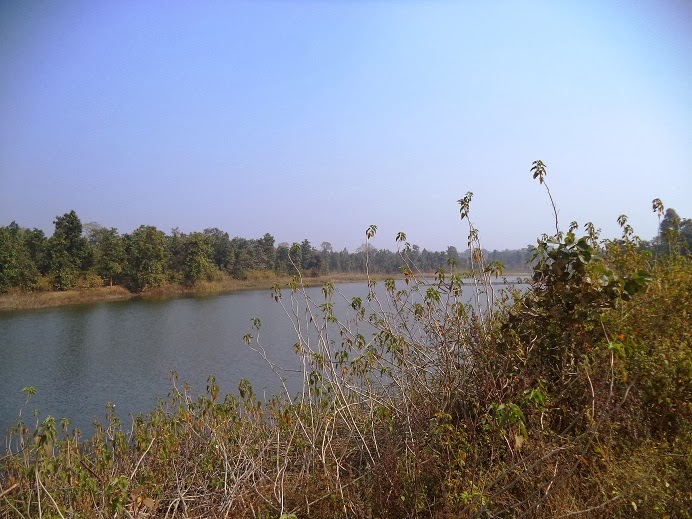
The water body on one end of the village


Recently, there was a government program promoting organic farming using compost. These are compost pits made using government grants. Unfortunately, nobody was sure about how to make the compost.

The dried looking fields. The farmers were trying to plant wheat

The lunch we got in the village. Rice with pigeon pea curry (dhal). Side dishes included mashed pigeon pea leaves made in two different ways.

My jottings after the visit to Patna village –

1. The segregation on the basis of caste within the small village of about 180 families affected the progress of the village.

2. Similar to most of the villages in our region, they had abandoned traditional cropping which included millets. That had spelt doom for them. Members from about 80 families had already migrated to other places in search of work.

3. There were 4 graduates in the villages. They were running pillar to post in search of a job. None of them was even exploring the option of self-employment/enterpreneuing.

4. There was a medium sized lake on one side of the village. The villagers were not able to use it for commercial gains.

5. The villagers had heard about the intervention we were doing in the neighbouring villages of Ghutwa and Ekta under the Climate Change Project. They wanted us to help them out too. There are challenges. Patna village is in Latehar district whereas the Climate Change Project is being implemented in 30 villages of the Satbarwa block, which is in Palamu district. Considering the enthusiasm the village had to see change, I would have to oblige them.

Monday, August 12, 2013

Village Visit - Latehar District (2)

Few more snaps from our visit to Latehar . . . cont'd from the previous post.

The walk through the green corn fields was refreshing

Entrance to a village

Ploughing fields

More agriculture work

Scene from a village . . .

Another small lake which we passed through

More rice fields

Saturday, August 10, 2013

Village Visit - Latehar District (1)

Last week, we had a supervisory visit to Latehar district as part of the Community Based Rehabilitation of the Disabled. The scenery of the villages we visited was awesome. Few snaps from the visit. 

I had real difficulty in selected the best snaps . . .

A river through which we had to wade across.

Sr. Banosa, Rachel, Sunita along with villagers walking back

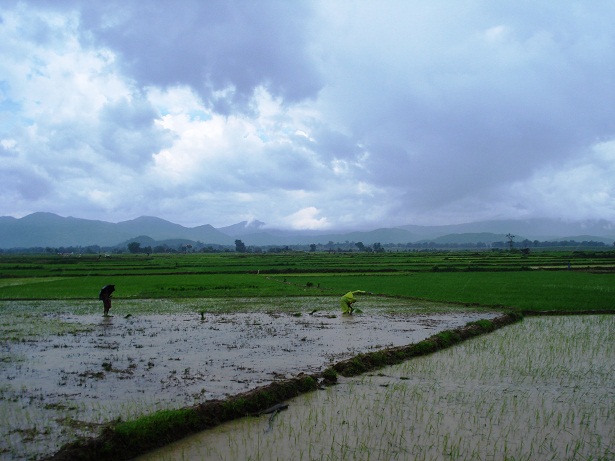
The stunning snaps of the rice fields. The hills of Mahuadand are in the background.

A small lake which we saw on the way . . .

Snap through the windshield of the jeep. 

Rice grown by the Systemic Rice Intensification method. 

The visits included long walks through such paths . . .

A snap which I got on the drive back . . .
Amazing . . . isn't it? 

The snaps are quite evident of how beautiful the place is. 

Tuesday, August 6, 2013

The Village Visit

Few days back, I had the opportunity of doing visits to few villages as part of our community health projects. It is not that I do not visit villages regularly. These village visits were quite different as I had the opportunity to walk through an entire village after quite a long time.

As is the custom, my colleague and I went straightaway to the village headman’s (mukhiya) house as soon as we reached the village. After exchanging pleasantries, we got into the serious discussion about the issue of people with disabilities for whom we had made the visit. 

I shall write about this in another of my posts.

The mukhiya was from a caste which is designated as backward. He got the opportunity of being elected as the mukhiya because the panchayat had the status of being a reserved panchayat where only a person from the backward caste could be elected.

What I would like to portray here is my walk from the mukhiya’s house to the government run village play school (anganwadi).

The mukhiya’s house was very close to the main road. However, his immediate neighbours were all people who were deemed as that of a higher caste. It was obvious that most of these people did not want to do anything with the mukhiya.

Cursory glances went up as we walked through this ‘high caste street’. There was no word uttered. Contrary, there were murmurings going on mainly between the womenfolk who were sitting in the courtyards of their homes.

The next street belonged to people of another caste whose major occupation was dairy farming. However, here the mukhiya had people asking him very sarcastically about the work he was doing. There were women asking him if there was some new government scheme in the pipeline. The tone and mannerisms did give away the mistrust they had on him.

The anganwadi was in the area where another caste was dominant.

I enquired about the Harijans - the supposedly lowest caste. Gandhiji gave them the name Harijan which means God’s people.

One of the men pointed to clump of thatched houses a bit distance away from the anganwadi.

Previous experience has taught us that it may not be wise to rush to this group. The problems would be the maximum here. But, almost the whole of any rural Indian village do not consider them humans. We would visit these houses at a later time.

Other than the caste system, one more aspect which concerned me . . .

The filth and dirt in the streets was appalling. One of the villagers commented that if it rains it becomes worse. Of course, the situation was worst in the area where the dairy farming caste was living. Conditions were perfect for the outbreak of an epidemic of any water borne disease. It would be a miracle if nobody got malaria in the entire village every week. And of course, the worst part . . . there were no toilets. It was open air defecation all around.

Any good things . .. …

There were televisions and music systems in quite a few houses. There were jazzy bikes parked in front of few houses. There was a sort of serenity and peace in the whole place although the divisions within the community was obvious. 

It is not uncommon to see romantic depictions of rural Indian vistas portrayed in many avenues.

However, I’m sure that what is depicted above is not an uncommon scene in many of our villages.


(Apologies for no snaps from the visit in this post. This is because of feedback about villagers not being comfortable about outsiders taking snaps. There is regular talk about the press and NGOs taking snaps from villages and using it for nefarious purposes. The snap given above is that from another village)