Showing posts with label climate change. Show all posts

Monday, June 8, 2015

Mission Millets Cont'd

Now that we know that finger millet used to be a crop in our community some time back, we took the decision to bring back the crop into the local agriculture. 

The first initiative was done couple of days back, where we had an interaction with the farmer community. About 40 people attended, most of them women. There is a great interest especially from farmers who are a bit elderly. They've had millets during their younger age and were quite pleasantly surprised that they have abandoned such a healthy crop. 

Snap from the event .. .. .. 


Points which we garnered from the crowd - 

1. Everybody is quite aware that there is a prediction of deficient monsoon. 
2. Most of the older farmers know that finger millet requires lesser irrigation. 
3. Many of the attendees were small landholders and they were more interested in having varieties of crops in small amounts in their land. 

Below are two pamphlets we made from templates provided from NJH.  


We are excited about this. We request your prayers. Distribution of seeds will start as soon as they arrive from NJH. 

Wednesday, April 1, 2015

Long forgotten . . .


Over the last 2 weeks, I've stumbled on some great information about finger-millets. 

Earlier, we only had information about pearl millet being grown in the communities around. However, we were surprised to know that even finger millet was cultivated here a long time ago.

The information came from two sources. 

The first source was a class I took for few people from the community on nutrition. I was narrating about crops which were cultivated earlier which are not done anymore. While I was narrating about millets, one middle aged man asked me whether I knew about samai, kodo and madwa. 

That was music to my ears. As we discussed, it dawned to me that all three millets used to be cultivated before 40-50 years in the communities of our region.  

The second source was one of our staff, who hails from North Eastern Uttar Pradesh who returned after a short visit to Vellore, Tamil Nadu. I had requested him to get us couple of kilograms of finger millet powder as we were finding it difficult to cope with our kids' demand for ragi porridge. 

He brought us the couple of kilograms all the way from Vellore, but also told us that few people cultivate the thing in his native village, about 150 kilometers from here. However, he also told us that the cultivation of the crop was slowly decreasing. 

Later, I had discussion about the crop with few of our retired staff. They all fondly remembered these crops. Further discussions were very similar to those which our team at NJH had with the local villagers. 

Now, we need to take a call on whether it is worth the effort to try to bring back finger millet cultivation in this region. The effort is going to be massive. 

The major hurdles - 
- In Palamu, it was only about 10 years since the local communities stopped madwa farming. Therefore, the memory of cultivation was very much there. Here, I don't think we would find anybody who'll have any knowledge about the cultivation, leave alone having had a taste of the millet. 
- We'll have to bring the seed from elsewhere. 
- We'll have to develop the taste of the local community to eat foodstuff made from madwa. 

The plus points are many - 
- It gives an alternative to the community in their diets
- Considering that there has been much crop losses due to vagaries of the climate, finger millets are a resilient crop. 
- It is poor friendly as it is not dependent on irrigation. 
- Of course, it is much more nutritious than other cereals. 
- It scores over bajra as it can be eaten all the year around. 

The big question remains on whether it would be worth the effort . . . God gave us success in Palamu . . . Requests your prayers as we plan ahead . . . 


Monday, April 7, 2014

System of Wheat Intensification

As part of the CBA Project, we had started off doing demonstration plots in various crops since last October. In one small plot of approximately 70 square metres, we did wheat cultivation as per techniques used in System of Wheat Intensification. Abinash Biswal, one of our project staff took the leadership in doing it and he's put it in his blog. 

Snaps of the same . . . most of them taken by Mr. Thomas John, Co-ordinator, Climate Change, EHA. 


From left to right - Prabodh, Mahendar, Rajeev, Sr. Rita, Mathias, Dinesh, Amit William, Jeevan, Dr. Roshine, Ms. Meghala, Ebez, Rachel, Sheron, Abinash

A closer look

Beetroot

The champion plant - had 46 heads from a single plant

Monday, January 20, 2014

Finger Millet Recipes Book

As part of the Climate Change project activity of promoting use of millets, we've come out with a finger millet recipe book. 

Below are the pages from the first draft. Would love suggestions . . . The size of the paper is A5 (half that of A4)


The English version of the recipe book is in various parts of my blog. Please click the links below for the respective recipes . . .

Monday, December 23, 2013

Thankful


The last Friday of every month, the staff at the hospital meets together for a whole day of prayer where we remember the blessings we had over the past month and put forward specific prayer requests. On 29th November we met, and had a wonderful time of sharing the blessing we enjoyed over 2013 and thanking the Lord for each of them. 
Apologies for the delay in sharing these with you all . . .

Please join us in thanking the Lord for each of the blessings. 

1. The hospital has been done well in 2013 in spite of major challenges. The absence of a surgeon was a major challenge as traditionally we are known as a surgical centre. We thank the Lord that the requirements in terms of finances and other requirements have been met so far especially in the light of a salary revision this year. 

2. Sampoorn Development India, one like-minded organisation has facilitated the construction of a water-tank in the campus. The Lord willing, the construction should be over very soon. 

3. The hospital has got an exclusive electricity connection to the campus and the electricity supply to the region has improved tremendously with us getting an average of 20-22 hours of electricity every day. 

4. There was a portion of land which was donated to us by one of our staff about 2 decades back. Unfortunately, few of the locals had been preventing us from taking occupation of the land. The Lord worked in the minds of these locals and has enabled us to take possession of the land. We could construct a boundary for this land and last week, the Maintenance Department started to cultivate on this land. 

5. Our Community Health Projects have been doing well so far. The impact made by the Climate Change Project, Community Based Rehabilitation Project is being slowly seen in the community. 

6. Our engagement with the government has increased over the last year. In the sphere of Tuberculosis Control, the Tuberculosis Unit caters to a population of over 750,000 population and the Global Fund Project increases awareness about the disease in the district. The UNICEF had requested us to oversee the mentoring of Labour Room facilities in Palamu and Latehar districts, thereby influencing Reproductive and Child Health in the region. Today, we were informed that we have been once more been authorized to disburse funds under the Janani Suraksha Yojana. This scheme was discontinued about 2 years back saying that we did not qualify as we did not have the requisite facilities in terms of personnel. 

7. We live in a region with tremendous amount of social unrest. We estimate that our hospital vehicles travels an average of 300 kilometers every day. We thank the Lord for safety and protection from accidents. 

8. We had some amazing stories of miraculous healing over the last year. We thank the Lord for each of these patients. Many of these patients had come to us as a last resort. 

9. There have been few constructions in the hospital. We thank the Lord for the funds that has enabled us to do these constructions. Please remember the burns unit, critical care unit, the sarai etc.  for which we need more funds. 

10. We thank the Lord for the new staff who joined in 2013. Dr. Roshine Mary Koshy (Medicine Consultant), Dr. Grace Mary George (Medical Officer), Dr. Aroma Tirkey (Dentist), Ms. Meghala Ramasamy, Mr. Jonathan Hongsha (IT Manager), Ms. Sheron Mathew (Physiotherapist), Mr. Asherush (Pharmacist) and Mrs. Tavitha, Ms. Priyanka, Ms. Premadini (Staff Nurses). 

These are the first ten items of thanks and praise which came. There were many more . . . 

Thursday, December 19, 2013

Invitation to a village


After quite some time, I got another opportunity to visit a nearby village. This visit was quite different from most of my previous visits. I went after the Village Headman invited me to visit the village and advise them on how to develop the place. This village, Patna in Manika block of Latehar block was a village where the Project on Community Based Rehabilitation for the Disabled was working. 

The Village Headman was disabled himself. It was quite a sad story on how he got a bad limp. He slipped and fell from a bund when he was studying in the third standard. From his description, it looked as if he had a posterior dislocation of the hip which was never managed properly. 

A meeting was arranged where the villagers could discuss issues with me. However, there was a small hitch. Most of the villagers thought that I would be late like most of the other guys who get invited to the village. 

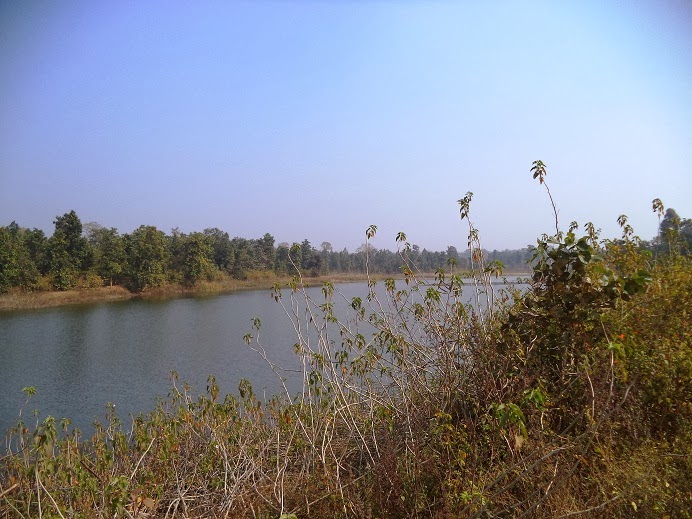
So, I had time to walk around and see the village. Below are few of the snaps from the walk . . .


The violet colored plants are wild tulsi.

The water body on one end of the village


Recently, there was a government program promoting organic farming using compost. These are compost pits made using government grants. Unfortunately, nobody was sure about how to make the compost.

The dried looking fields. The farmers were trying to plant wheat

The lunch we got in the village. Rice with pigeon pea curry (dhal). Side dishes included mashed pigeon pea leaves made in two different ways.

My jottings after the visit to Patna village –

1. The segregation on the basis of caste within the small village of about 180 families affected the progress of the village.

2. Similar to most of the villages in our region, they had abandoned traditional cropping which included millets. That had spelt doom for them. Members from about 80 families had already migrated to other places in search of work.

3. There were 4 graduates in the villages. They were running pillar to post in search of a job. None of them was even exploring the option of self-employment/enterpreneuing.

4. There was a medium sized lake on one side of the village. The villagers were not able to use it for commercial gains.

5. The villagers had heard about the intervention we were doing in the neighbouring villages of Ghutwa and Ekta under the Climate Change Project. They wanted us to help them out too. There are challenges. Patna village is in Latehar district whereas the Climate Change Project is being implemented in 30 villages of the Satbarwa block, which is in Palamu district. Considering the enthusiasm the village had to see change, I would have to oblige them.

Sunday, November 24, 2013

Praise and Prayer Bulletin, November 2013

1. We thank the Lord for the 24 hours electricity supply we have since the last week. 

2. Almost all of our high risk patients survived and went home well. We thank the Lord that that we've been used to be a blessing in the lives of these patients. We specially thank the Lord for the baby whom we could save after a rupture uterus. However, we're very well also aware that we would do better with specialists in the areas of obstetrics and pediatrics. Please pray. 

3. We thank the Lord for the success we've had with the Finger Millet cultivation and the SRI Method of Rice Cultivation which we did as part of the project on Community Based Adaptation towards Climate Change. Please pray for the efforts we take to promote millet (rather, reintroduce) in the community. 

4. We thank the Lord for the Mr. Ashurosh (Pharmacist) and his wife Mrs. Tabitha (Staff Nurse) who joined us since last week. Please pray that the Lord will bless them and they would be a blessing to the hospital and the community. 

5. Duncan Hospital, Raxual has been kind enough to depute Mr. Shivnath, laboratory technician as we have a shortage of lab technicians. We thank the Lord for the Mr. Shivnath's life as well as pray that the Lord will bless him. 


6. We thank for the Lord for Dr. Titus and his wife, Dr. Grace. Kindly pray for them as they plan for the future, especially post-graduate studies. 

7. We thank the Lord for the smooth construction of the water tank. The contractors plan to complete the construction by the end of this year. 


8. There were 2 of our staff families who were blessed with babies over the last couple of weeks. Mrs. Sudha (staff nurse) was blessed with a baby boy. Mr. Rajeev (laboratory technician) was blessed with a baby girl. We thank the Lord that both the deliveries were uneventful. 

9. Please pray for the financial needs of the hospital. The new transformer and the high tension electricity connection has been a major financial burden for the hospital. In addition, we need to upgrade the Acute Care Unit, put in place a new Hospital Information System, construct the Sarai and at least couple of new residential apartments for our staff. 

10. We look forward for new consultants in the specialties of General Surgery, Obstetrics and Pediatrics to join us. Please pray and pass the message along. 

11. We appear to be heading into a very harsh winter. We already temperatures dipping to as low as 5 degree Celsius. Please pray for the health and protection of the staff.

12. Please pray for couple of our staff who are sick. 

Monday, November 18, 2013

Fields of Joy

These are snaps of the agricultural work that we had been doing as part of the project on Community Based Adaptation towards Climate Change.

Fields of finger millet and System of Rice Intensification (SRI) methods for Rice cultivation . . . 

Finger millet

Finger millet . . . lots of stalks

Good yield with SRI

SRI, another view

Ripe stalks of Finger Millet
Lac cultivation . . . Reintroducing lac in our communities. Our next venture.

Monday, August 5, 2013

Climate Change . . . What an association

We’ve been working quite hard in the area of bringing resilience in our surrounding communities towards climate change. The strategies have been manifold.

The major strategies being aimed towards equipping families to alternative livelihoods, facilitating the cultivation and acceptance of drought resistance crops like millets, group formation aimed at co-operative agro-based livelihoods and forest conservation.

It was surprising to read in the BBC about a study published in Science with research done at the University of California, Berkeley, which says that shifts in climate are strongly linked to increases in violence around the world.

This makes lots of sense to a place like Palamu where NJH is.

Palamu has been famous for the periods of irregular drought and unpredictable rainfall. Even as the rest of the nation celebrates a good monsoon, Palamu has been in the throes of an bad drought.

The study brings out the fact that it is all the more important that the government and civil society organisations think seriously about ways to mitigate the effects of climate change.

And the key I believe is to look back at the way our forefathers have tackled changes in climate. Many a time, we have come to conclusions that forceful interventions in the name of development and modernisation has brought about more challenges than solutions in the long run.

A simple example is that of the Green Revolution which had been touted as the long standing solution to food insecurity. However, on looking back, we see that it caused many a damage to traditional dietary habits of communities. At least in the Palamu region, this holds true as communities which depended on millet crops which are drought resistant were forced into or enticed into water dependent crops of rice and wheat.


I’m sure we need to look more into this aspect of climate change, but one cannot take away the fact that people like me do not find it difficult to accept such a research. 

Thursday, March 21, 2013

Community Based Adaptation

This is a guest post written by my colleague, Mr. Avinash Biswal who serves as a Project Assistant in the Community Based Rehabilitation Project. This is in response to queries from readers about Community Based Adaptation towards Climate Change. Mr. Avinash is a graduate in Psychology who has done Masters in Social Work from Manipal University. This is his first assignment after his Masters. 


Community Based Adaptation (CBA) in simple terms is an approach which facilitates the communities to adapt to the Climate Change. Climate Change enhances hazards like Floods, Cyclones, Droughts, erratic rain fall etc. Even though it is a global issue, its impact is falling excessively on poor communities as they are highly vulnerable. In order to adapt to the Climate Change, many new and effective technologies have been developed and new developmental strategies have been adopted but all this is immensely failing to reach the most marginalized and vulnerable communities in today’s world. Therefore, CBA projects are especially focusing on the most vulnerable communities and work to empower them in increasing their resilience towards the impact of the Climate Change.

Ancient communities have extensive knowledge on climatic conditions and since many generations, they have been using their own strategies to adapt to the changes in climate. But due to reasons like Unsustainable Development and Irresponsible Planning, complications in climate have been increased drastically. Thus it has gone beyond their capacity to adapt to the present Climate Change. Hence, CBA in its strategy never encourages communities to adopt outside strategies, instead it facilitates communities to develop local strategies and enhance their capacity in the adaptation to the Climate Change.

Nav Jivan Hospital has recently undertaken the CBA project in the local community. The target is 30 villages with an approximate total population of about 40,000. The community is severely affected by droughts whereas most of the members of the community depend on the agriculture for their food as well as income. The organisation is working with the community to cope with drought by helping them to adopt drought resistant crops and alternative livelihood. 

Saturday, January 5, 2013

Cold . . . Wreaking havoc


Many of us think that it’s only drought that destroy agricultural crops. A downside of the very harsh winter which also brings about beautiful scenes of nature is the havoc it wrecks on agriculture. 

Kindly see the following snaps.

This is potato crop which has been destroyed because of extreme cold in villages around NJH.

Below is the very small potatoes which have been dug up from the destroyed crop.

However, there are crops which does not get much affected like green peas, cabbage.


Another way to prevent such sort of damage is to do inter-cropping like the snap given below. If you look carefully, you can see tomato, potato, brinjal and mustard in the same vegetable patch.

We hope that the temperatures would not go down any further . . .  However, the farmers tell us that it is not about the temperatures going down . . . rather, it is the severe fluctuations in the temperature that is causing all the damage . . .

That's climate change for you . . .